If you've ever rolled your office chair across a hardwood floor at 7am, you already know the problem. That grinding, scraping sound that seems designed to wake everyone in a three-room radius. Most people assume it's just how chair casters are — loud, hard, and slightly destructive.
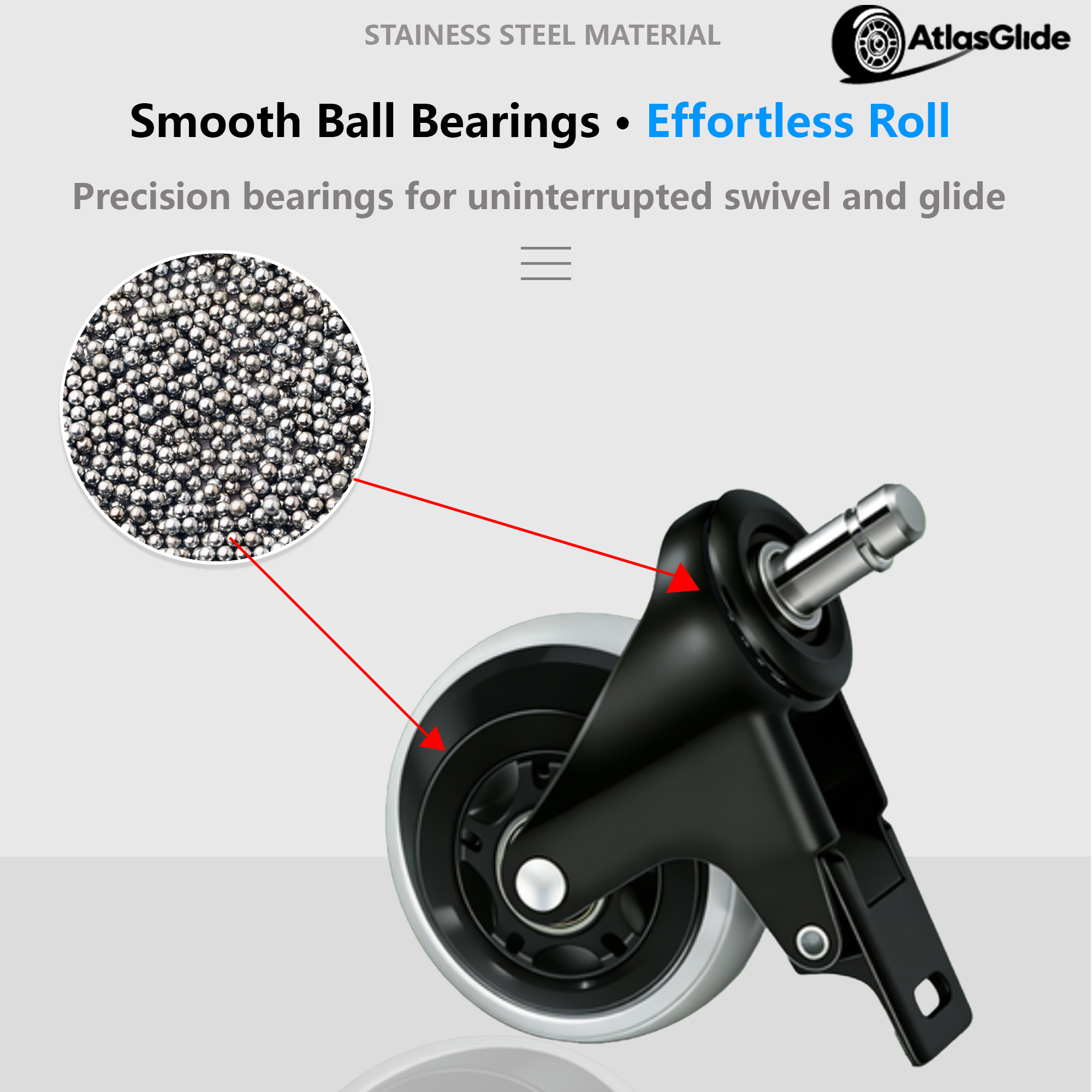
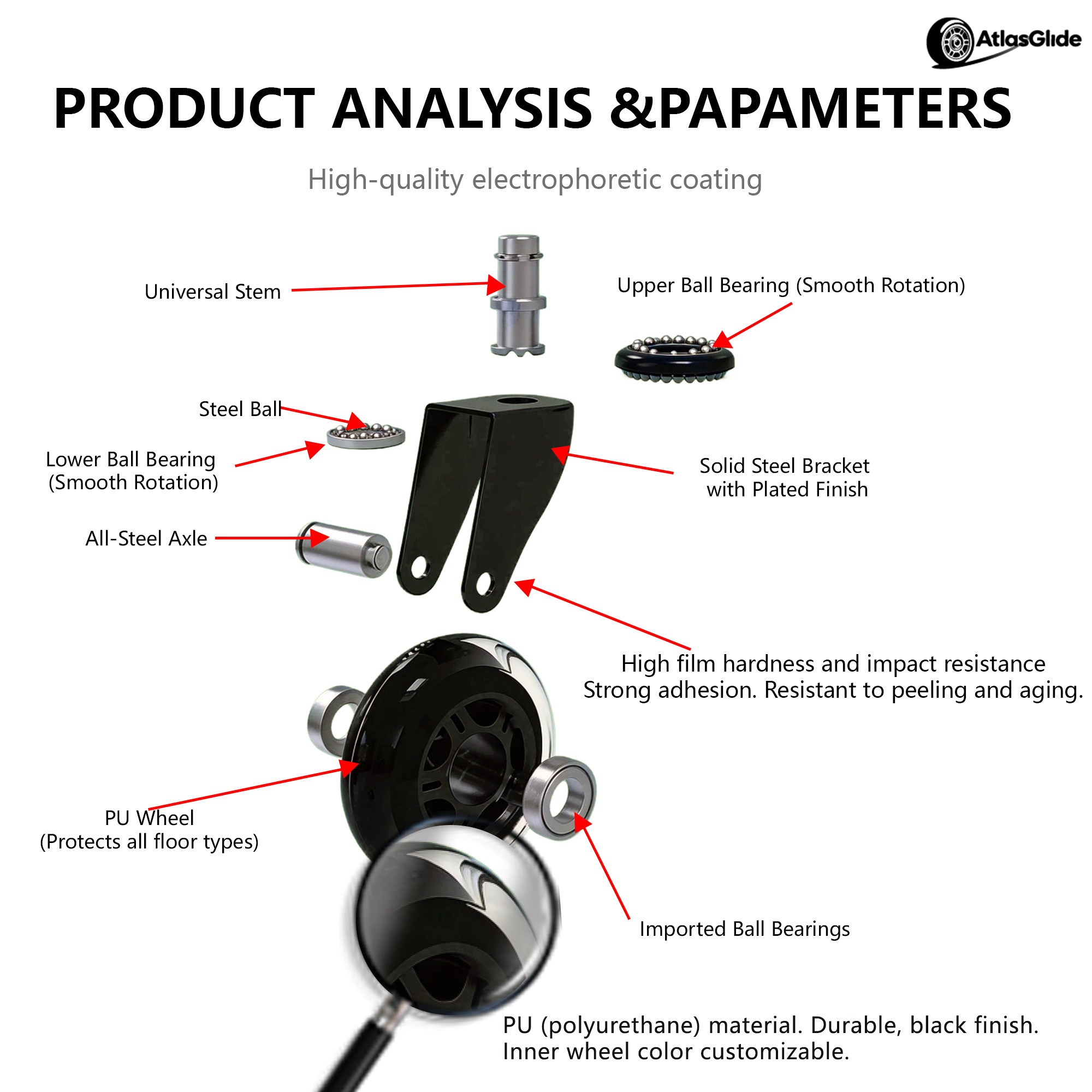
It doesn't have to be. But to understand why, you need to look at what's actually inside a caster wheel.
Why Most Casters Are So Loud
The typical office chair comes with cheap twin-wheel casters made from hard nylon or ABS plastic — materials that are cheap to mold, light to ship, and completely indifferent to your floors. When that hard surface rolls over a seam in your flooring, a dust particle, or just the natural texture of hardwood, it transmits every vibration straight into the frame of the chair and up into the room.
The bearings aren't much better. Most budget casters use a simple sleeve bearing or a single-race ball bearing — which works fine until the grease dries out or debris works its way in. Once that happens, you get the classic click-grind-scrape combo that makes open-plan offices unbearable.